/ CBS News
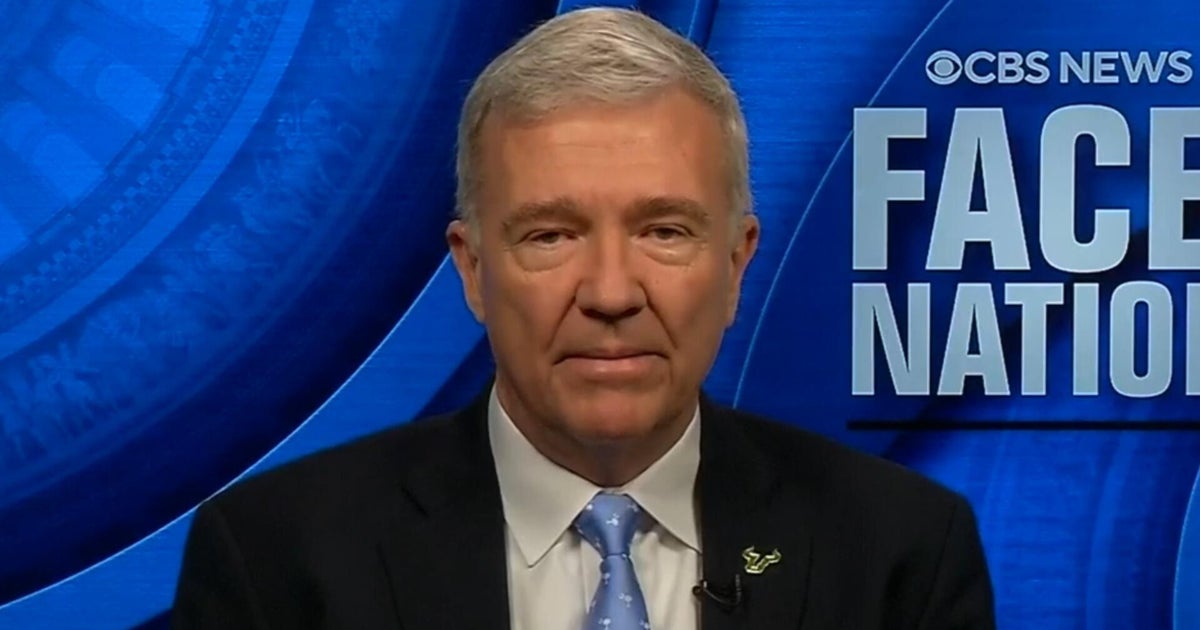
The following is the full transcript of an interview with retired Gen. Frank McKenzie, former commander of U.S. Central Command, that aired on "Face the Nation with Margaret Brennan" on April 5, 2026, moderated this week by senior White House and political correspondent Ed O'Keefe.
ED O'KEEFE: We're joined now by the former head of U.S. Central Command, retired General Frank McKenzie. General, Happy Easter.
GEN. FRANK MCKENZIE: And the same to you, Ed.
ED O'KEEFE: So it took just under 48 hours to find the missing weapons systems officer. After the jet they were in went down in a remote and mountainous area of southwestern Iran, the weapons officer was hiding in a mountainous crevice. We're told by a senior administration official, what's your assessment of how the search and rescue operation went?
GEN. MCKENZIE: So I think I'd draw two lessons from it, Ed. First of all, the excellence of the joint force, our ability to rapidly pivot, to look for a downed air crewman. We train for this endlessly. It's a part of every time we send air crew over enemy territory, we have detailed, elaborate plans to go get them. It's a very basic part of who we are as American fighting men and women. So that plan swung into action. I think it was executed pretty effectively. As always, you've got somebody on the ground, may be injured. They got to get to a position where they can hide until you can get to them. All that seemed to work out very well. And you know, we did, in fact, lose a couple of aircraft in that in that mission. But I would just tell you, it takes a year to build an aircraft. It takes 200 years to build a military tradition where you don't leave anybody behind. You take the aircraft trade any day in a situation like this. The other lesson, I think, is a hard lesson for Iran. First of all, they were not able to find the missing air crewman. Second, you know, they put out a broad appeal to their people to turn him in reward, asking for all kinds of leads, that does not appear to have been successful. And that would- I think that's maybe a sign of disaffection, don't know, but you can't, you can't be happy with that if you're a senior leader in Tehran this morning.
ED O'KEEFE: Yeah, you know Iran's Revolutionary Guards now claiming responsibility for attacks on petrochemical plants in the UAE, Kuwait and Bahrain. They warn its attacks against U.S. economic interests will intensify if attacks on civilian targets in Iran are repeated, does Iran and its proxies retain the capacity to inflict serious damage at this point?
GEN. MCKENZIE: They have the ability to inflict damage. They do not have the ability to gain mass effects. And by mass effects, I mean firing many, many dozens of rockets, missiles or drones. I think that capability has been eroded steadily since this campaign began. And frankly, at about plus 30 days into this campaign, I think if you're at Central Command, you've got to be reasonably satisfied with where you are right now. In fact, Ed, when I was the CENTCOM Commander, if you had given me this situation at plus 30 days, I would have rejected it as being too optimistic by far. So we've had good effect. Our effects are going to continue. It's going to be increasingly harder for them to launch missiles and rockets. We may not get to zero for a while, and I think there's still some time ahead, but everyone realizes that. But I think we're on track here. This campaign is moving very effectively, and I believe the pace will pick up every day.
ED O'KEEFE: To your earlier point, the president said something interesting to Fox News this morning, revealing for the first time that the U.S., earlier this year had sent a quote, lot of guns to the Kurds, who live in northern Iraq, northern Iran for use by protesters. So he wanted them to use these weapons. And said, you know, inferring now that he was sending weapons to have the Iranian people rise up on Wednesday night, though, in his big speech, clarifying what the war is all about, he said, This campaign is not about regime change, but if they are now, in fact, arming protesters. What might that signal?
GEN. MCKENZIE: Well, I think you want to put pressure on this regime in every way that you can. Arming Kurds certainly increases pressure on the Iranian regime. We know from history that leadership in Iran responds when existential pressure is applied to the regime. Arming the Kurds moves you a step closer toward that even if your ultimate aim is not regime change, getting the regime and Tehran to a place where they'll make a deal that's to our liking, is going to be the inevitable by product of intolerable pressure that's placed over- on them. And I think all of these add together to do that.
ED O'KEEFE: You said last week, a success for the White House is that the Strait of Hormuz reopens, but that vital passageway, of course, remains effectively choked off. The president this Easter morning, used some, shall we say, colorful language, to threaten Iran again to reopen the strait, if the U.S. launches its own military operation in the coming days to open the strait, what's it going to take militarily to do that?
GEN. MCKENZIE: Well, let me, let me say, first of all, we do have the ability to open the strait. Should we choose to do it in what you're seeing now are the- what I would call the precursor of the initial steps in such a campaign you want to reduce Iran's ability to fire short range rockets and missiles into the strait against warships. You want to take out their fast attack craft. Think of them as cigarette boats, large, powerful outboard engined boats that can race out and get among ships and cause direct damage that way. What we're doing is we're going after all those vessels. And that's where a 10s attack aircraft, attack helicopters and other slow moving, low altitude platforms are so very effective. So we're in the process of removing those right now. At the same time, we're working to get rid of Iran's mine stockpile. The mines are very dangerous. They had thousands when the war began. I have no doubt we significantly (UNINTELLIGIBLE) them, now. Of course, it doesn't take many mines to cause a significant blockage to world shipping. So all of that is underway right now, and you want to reduce those to a low level before you put your warships up there to actually sort of test the waters in that strait. I have no idea what Admiral Cooper's decision making process is going to be for that, but I think we're well on the way to achieving those goals.
ED O'KEEFE: Can the strait be reopened with an air and naval campaign or are you going to need ground troops?
GEN. MCKENZIE: I think it could be opened with an air and naval campaign, and the use of ground troops would probably be along the line of raids. And remember, a raid is an attack with a planned withdrawal, where you don't plan to stay. The one exception might be Kharg Island. I know the president has talked about it. I think it has a unique place in Iranian culture, because of one thing, if you seize it, you're holding Iranian soil. Secondly, it is the critical mode through which all their oil supplies pass. By seizing it, you have the opportunity to cut that off, inflicting grievous damage on the Iranian economy, and yet with the opportunity, perhaps, to return it as part of a negotiation process. Further, you don't permanently damage the global economy by destroying the infrastructure. So I think Kharg Island is a very lucrative target. I'm sure we're looking at it hard right now. I have no idea if we're going to choose to go up there.
ED O'KEEFE: In our last 30 seconds or so, here, General, bottom line this. The president says two to three weeks is all that it's going to take? Would you agree with that? Or is it going to take longer?
GEN. MCKENZIE: You know, I always hesitate to put time on a- to put a timeline on a military operation like this, but I would say the Iranians would be very well served to listen to President Trump when he says he's going to hit him because he's pro- he's proven that he's willing to do that. So that's the lesson I would learn from from his most recent pronouncement, and from actually what we've done in the war to this day, if the president says we're going to do something, we're probably going to do it. And it probably is good time for the Iranian leadership to take note of that fact.
ED O'KEEFE: All right, we'll leave it there. General McKenzie, happy Easter again. Thank you for spending some time with us this morning. We appreciate it.